
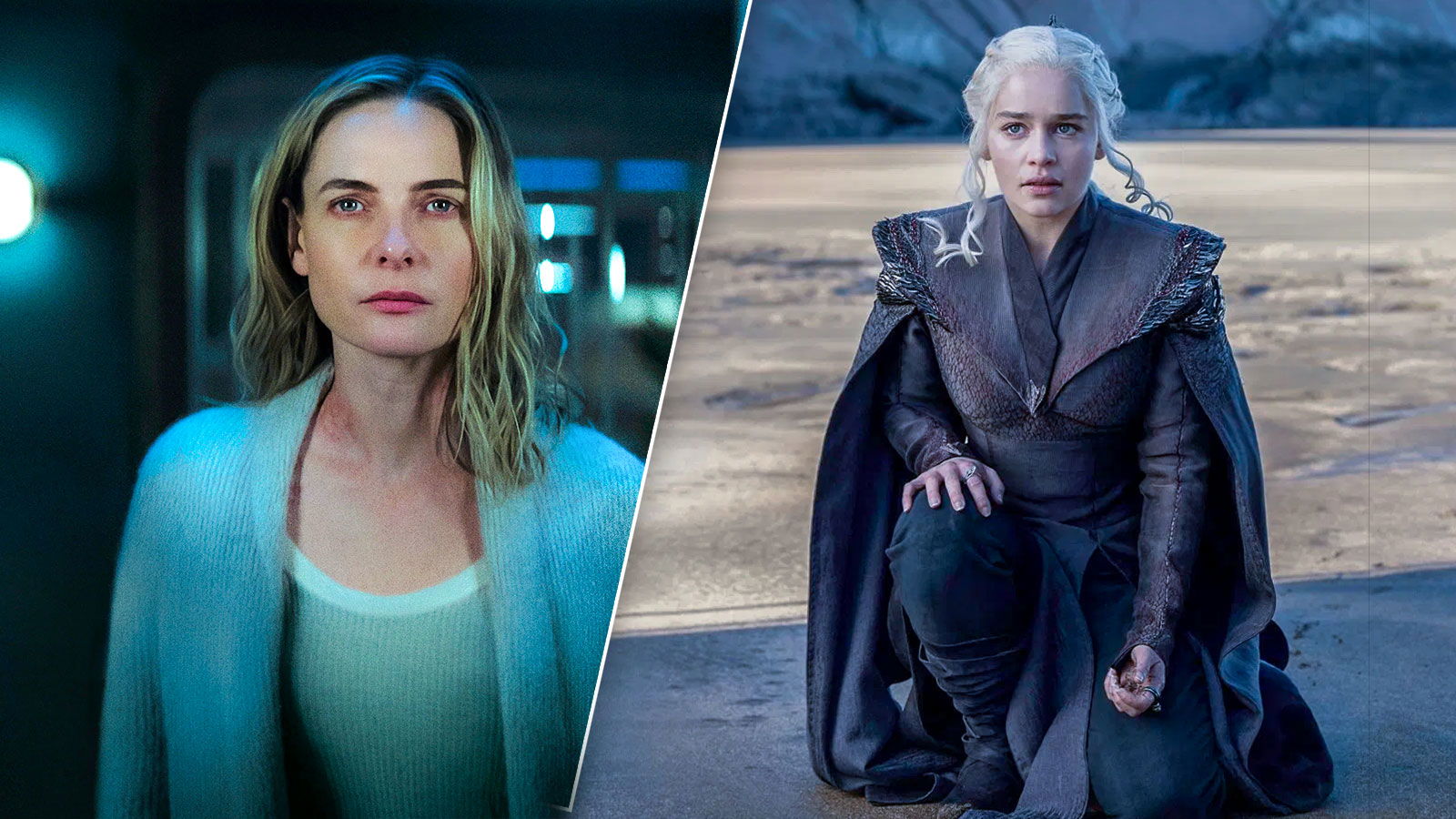
Silo Season 3 faces the exact creative test that once humbled Game of Thrones: how do you expand a beloved world near the end without making the conclusion feel hurried, overstuffed, or emotionally undercooked? Apple TV’s sci-fi drama, adapted by Graham Yost from Hugh Howey’s novels, returned on July 3, 2026, with a 10-episode season that deepens Juliette Nichols’ present-day story while introducing a major ‘Before Times’ timeline involving Jessica Henwick’s journalist Helen Drew and Ashley Zukerman’s Congressman Daniel Keene.
With Season 4 already confirmed as the final chapter, the show now has to answer its biggest mysteries without losing the human ache that made the silo feel so frighteningly real.
Silo Season 3 Adds a Risky New Timeline
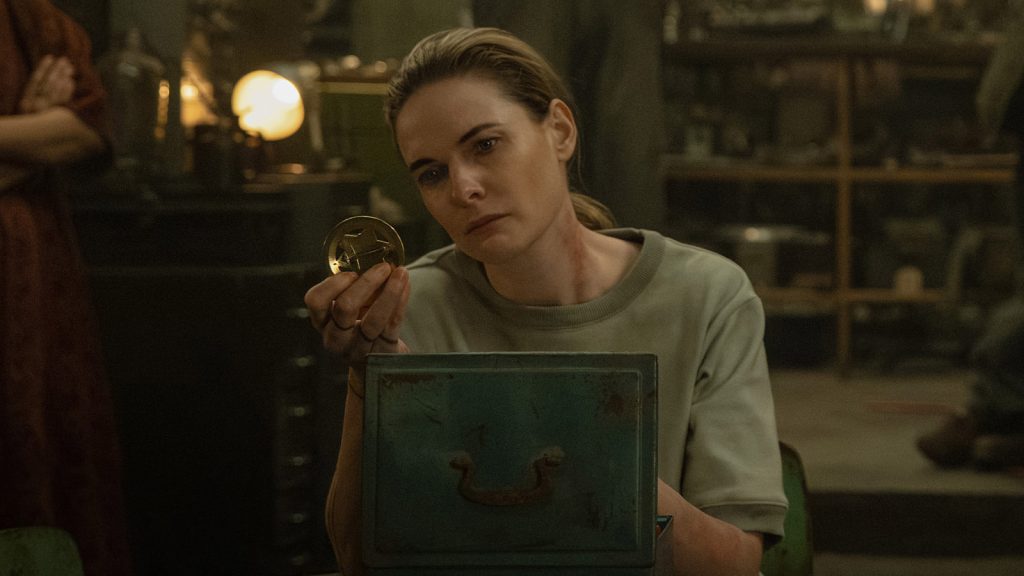
Silo Season 3 makes its boldest structural move by bringing the ‘Before Times’ into the main body of the story. After two seasons spent largely inside the underground world of Silo 18, the new season opens the door to pre-apocalypse Washington, D.C., where Helen Drew and Daniel Keene begin uncovering the political and technological decisions that eventually lead to the silos. People reports that Season 3 explores the origin of the silo system through this past timeline while continuing Juliette’s present-day struggle after the Season 2 finale.
A late second story can either deepen a show’s ending or make it feel like a detour. After two seasons focused on oxygen, control, forbidden relics, and Juliette’s fight against lies, Silo’s Before Times storyline must feel essential. Henwick understands the challenge of joining such a large ensemble, saying (via Movie Web), “It’s kind of a relief because then you just go, okay, it’s not all on my shoulders. Like, we all succeed together and we all fail together.”
Silo’s strength has always come from the collision of politics, memory, class, surveillance, grief, and survival; not just one mystery. Zukerman sees Season 3 as an extension of that foundation, saying the previous seasons “offer our story so much meaning.” That history gives the Before Times weight, as every decision carries the shadow of what viewers know is coming. This is where the Game of Thrones comparison becomes fair without becoming lazy. Henwick joined Game of Thrones in Season 5 as Nymeria Sand, and the Sand Snakes storyline remains one of the franchise’s more divisive additions.
Yet the larger Westeros machine could absorb uneven material because the show still had massive accumulated context. Silo Season 3 has a similar cushion. The viewer already understands the future prison, so the past does not need to invent urgency from scratch. The difference is that Silo has less time left. The show has only Season 3 and the confirmed final Season 4 to bring Juliette’s rebellion, the origin story, the Algorithm, the other silos, and the truth about the outside world into a satisfying arrangement. Per reports, Season 4 has already completed filming, which means the creative destination is already built into the show’s production path. That helps because a planned ending is one of the best medicines against panic writing.
The worst final seasons often feel as if they are sprinting through emotional consequences in order to reach pre-decided images. Silo can avoid that if every answer still feels attached to a person we care about.
Can Silo Avoid Game of Thrones’ Ending Mistake?
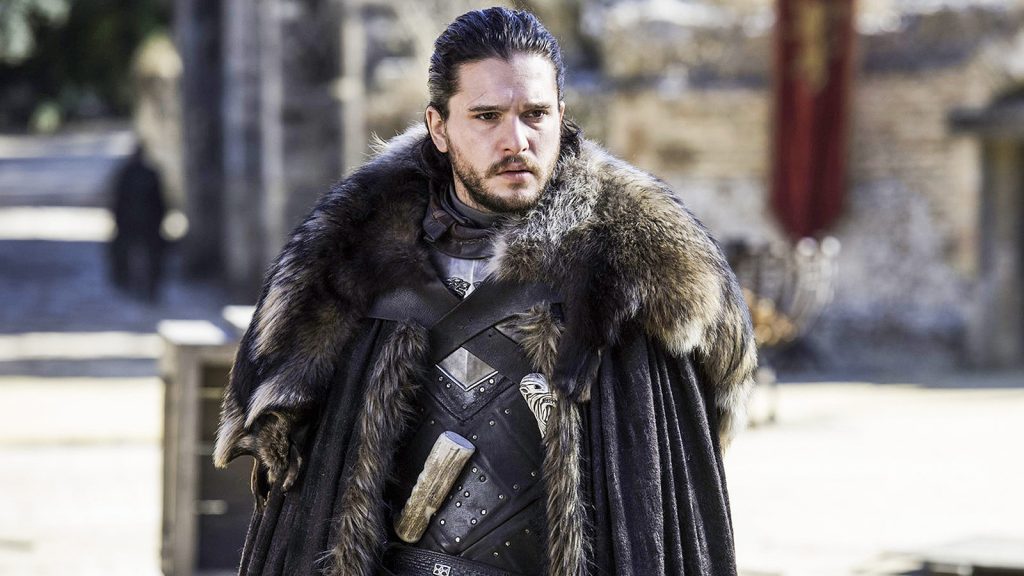
The biggest ending mistake Game of Thrones made was not choosing a tragic finish. Tragedy belonged in Westeros from the start. The problem was pace. Season 8 was widely criticized for racing toward huge character turns and political outcomes without giving the audience enough time to feel those choices become inevitable. That is the trap Silo must avoid. It cannot spend Season 3 collecting mysteries like spare parts and then bolt them together in Season 4 with a few speeches about history and control. The show has always worked best when its revelations are physical, personal, and painful. Juliette finding the truth outside the silo worked because it was not an abstract lore dump.
It was a woman risking her life in a suit, on a hill, with every breath turning into evidence. Season 3’s dual-timeline design can be a gift if Yost keeps that principle intact. The past must make the present hurt more. Helen’s journalism, Daniel’s political access, Charlotte Keene’s strange experience, and the wider conspiracy behind the silos should explain not only how the underground system was built, but why ordinary people allowed fear, convenience, and authority to do so much of the work.
The advantage Silo has over Game of Thrones is obvious: Howey’s original trilogy is complete. HBO’s fantasy epic reached its final stretch without published novels for the ending, while Silo has a full literary roadmap even if the adaptation changes routes. That does not guarantee success, because adaptation is still a knife-and-thread job, but it gives Yost a firmer spine to build around. Apple TV has also renewed the series through its final season rather than leaving its endgame uncertain, which should help the writers pace revelations with more discipline.
There is still one concern. Season 3 appears to reduce Juliette’s immediate dominance by giving significant space to Helen and Daniel. Juliette returns after the Season 2 finale with memory loss while the Before Times material becomes a major parallel narrative. That can be interesting, but it must be handled carefully because Ferguson’s Juliette remains the show’s most visceral emotional engine. If the series drifts too far from her, viewers may respect the mythology while missing the person who made them care about it.
Well, Silo is better positioned than Game of Thrones was, but it is not immune to the same disease. The Apple TV series has a completed book trilogy, a final-season renewal, a thoughtful showrunner, and a world that naturally supports layered timelines. Still, endings are won in the small choices: who gets silence, who gets remorse, who gets punished, and who gets to understand the truth before it is too late. My prediction is that Silo can avoid the Game of Thrones ending curse if it remembers that answers are only satisfying when they leave fingerprints on the characters. I do not need Season 3 to explain every secret immediately, but I do need each reveal to make Juliette, Helen, Daniel, Sims, Bernard, and the people of the silos feel more human rather than more like chess pieces in a clever diagram.
Drop your theory in the comments below, and follow FandomWire for more Silo updates.
Silo Season 3 is streaming on Apple TV, with new episodes released weekly on Fridays. Game of Thrones is available on HBO.
This post belongs to FandomWire and first appeared on FandomWire
from FandomWire https://ift.tt/l5PcvD2


No comments: