
Life, Larry and the Pursuit of Unhappiness Episode 4 Ending Explained: Why Is Bobby Sent to Psychiatric Hospital?
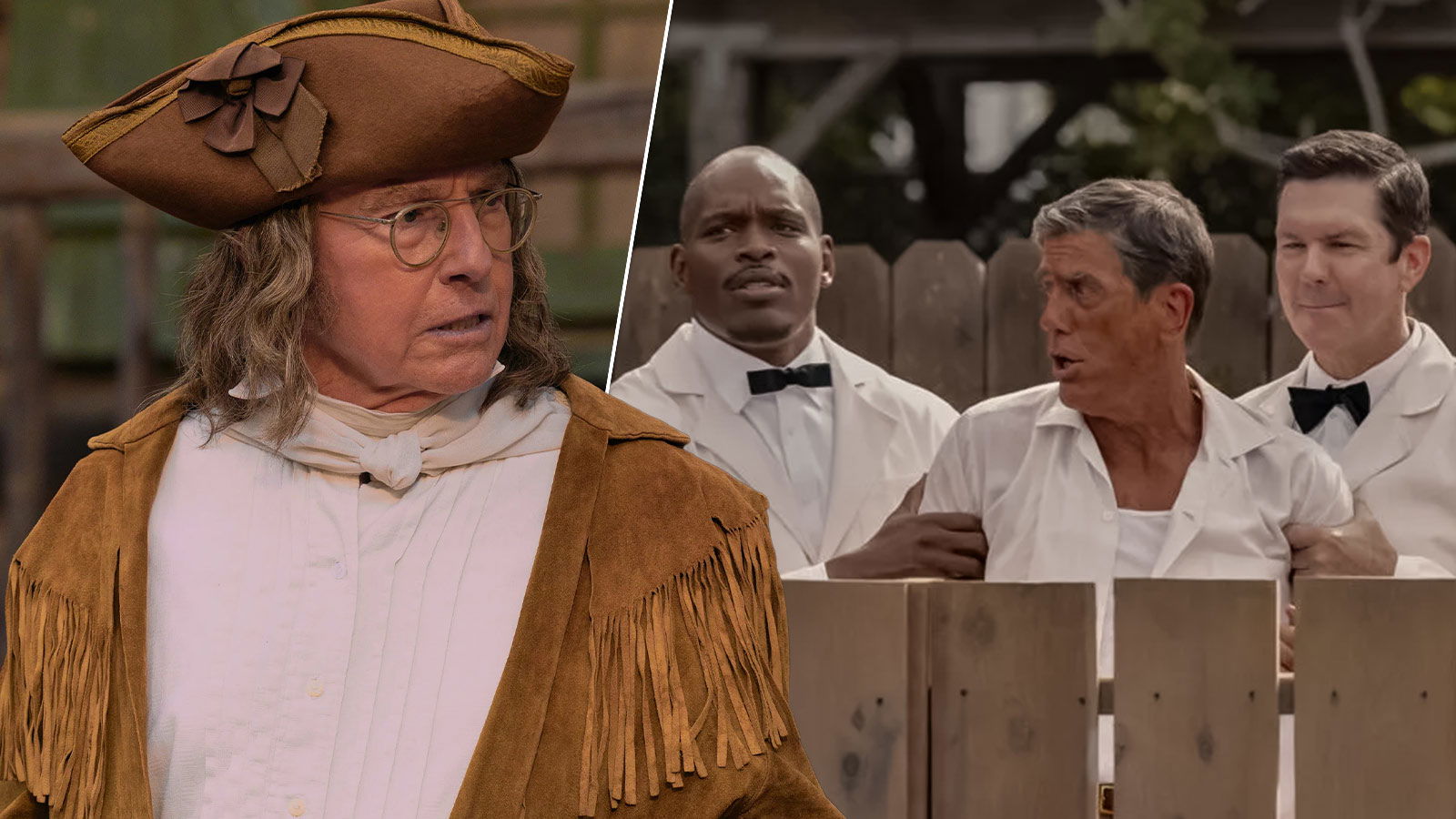
Life, Larry and the Pursuit of Unhappiness Episode 4 sends Bobby to a psychiatric hospital after Dora Salk and Evelyn identify him as the disturbed neighbor the attendants have been called to collect. That explains the action, although Larry David’s final joke is aimed directly at Robert F. Kennedy Jr. Perrie gives Bobby Kennedy’s strained voice, anti-vaccine rhetoric, brain-worm reference, and stories involving dead animals. David, dressed as Jonas Salk’s proud mother, watches his rant become so bizarre that two attendants escort him away.
I laughed and then winced because Kennedy currently leads the U.S. Department of Health and Human Services. HBO’s historical comedy also visits Bob Woodward, Henry Ford, and James Buchanan during Deepthroat, yet the Salk sequence closes the half-hour because it connects America’s past with a current public-health dispute. Episode 4 premiered on July 17, 2026.
Episode 4 Saves Its Sharpest Target for Last

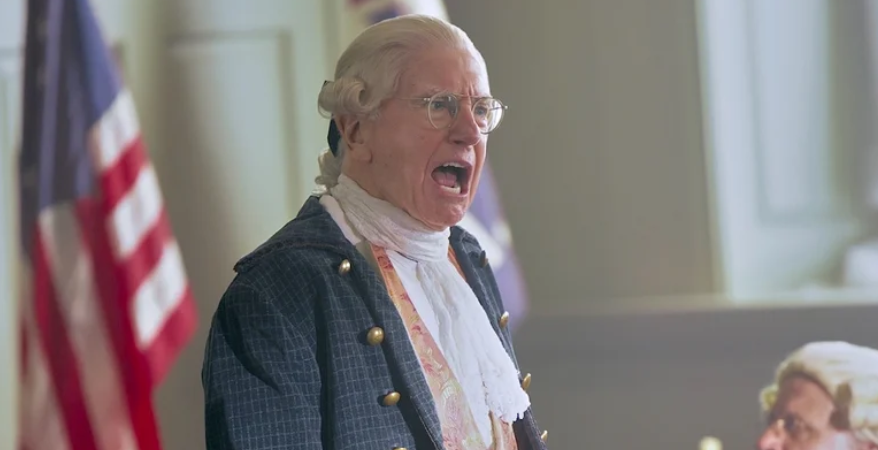
Deepthroat moves through four periods without forcing one sketch to carry the entire episode. Woodward receives suspicious information, Ford takes a local Jewish man for a drive, Buchanan tries his luck with women, and Salk’s scientific achievement gives his mother endless bragging rights. Metacritic’s episode guide confirms those four storylines.
The earlier pieces are amusing whenever David reduces a famous event to an argument about manners, although that rhythm has started becoming predictable. He enters history, notices one social offence, and refuses to let it go until everyone nearby regrets meeting him. The Salk material carries greater urgency because its dispute extends beyond one backyard. A RogerEbert.com review praised the series for moving between rapid jokes and timely social commentary. Bobby remains funny, but his claims are designed to make the laughter uncomfortable.
Dora and Evelyn Make Vaccine History Personal
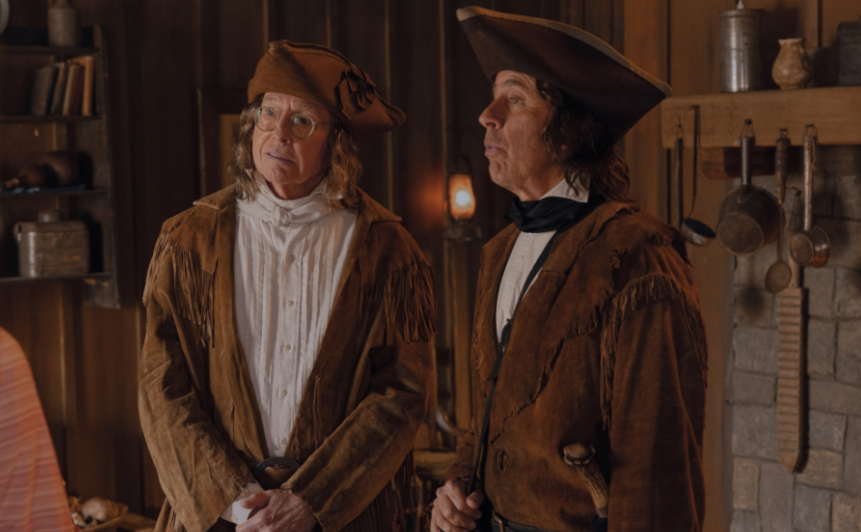
The finale takes place in Queens in 1955, where Dora and Evelyn compare their sons across a fence. Jonas is upstairs trying to work, while his mother repeatedly interrupts him to improve her side of the competition. Evelyn’s child manages a clothing store. Dora’s son is developing the first successful polio vaccine. Poor Evelyn has walked into a contest she cannot win.
David’s drag performance could have swallowed the segment, but Dora has a recognizable personality beneath the costume. She is intrusive, loud, fiercely proud, and correct about the importance of Jonas’ research. Gold based Evelyn on her mother and grandmother, telling TV Insider, “That whole idea of a Jewish woman whose son is a manager of a clothing store, living next door to one of the greatest scientists in the entire world… I love that whole dynamic.”
Bobby then warns that the vaccine will kill people and cause heart attacks before opposing measles shots as well. Dora answers, “Drop dead, Bobby. You should die a dog’s death. You don’t know anything about science, you’re not a doctor.” Her fury made me laugh because she refuses to treat his statements like respectable medical advice. Gold shared that investment, saying, “I come from this family that totally believes in vaccines.” She also called satire “a very powerful weapon,” which describes the closing sequence rather well.
Bobby Is RFK Jr. With Barely Any Disguise

The episode never speaks Kennedy’s full name, yet Bobby is not designed as a difficult puzzle. Perrie mimics his vocal quality, and the script includes references to a brain parasite, a dead bear, and a whale. TV Insider identifies the character as a direct Kennedy stand-in. His government position gives Dora’s warning its sting. Kennedy is the 26th U.S. health secretary, according to his official HHS profile. Bobby says that if he were in charge, children would not receive those vaccines. Dora responds, “If you were in charge, God help us all! If some idiot, some moron, ever put you in charge, that would be a dark day for humanity.”
The dialogue comes from a woman living in 1955, but viewers know her imagined future has arrived. David does not need to explain the punchline after that. The parody carries personal history too. Hines, Kennedy’s wife, played David’s spouse and eventual ex-wife throughout Curb Your Enthusiasm. David introduced the couple, while Hines later acknowledged tension with her former co-star after Kennedy joined the Trump administration. Schaffer confirmed that Hines was not approached for the HBO series, despite several Curb veterans returning. The Daily Beast reported on her absence and the damaged relationship.
That history does not make the sketch a private message, but it gives every insult an added sting. David knows Kennedy personally, worked with Hines for decades, and still chose to close an episode by placing a version of her husband inside a psychiatric van.
Why Is Bobby Sent to a Psychiatric Hospital?
The attendants arrive while searching for the person responsible for a neighborhood disturbance. By then, Bobby’s warnings have expanded into claims about fluoride causing gender confusion, the Spanish flu being engineered to spare certain groups, and bizarre stories about animals. Dora and Evelyn point toward him, and the workers decide he is the person they were sent to retrieve. The psychiatric hospital staff removes Bobby after the women identify him.
The ending exaggerates for comedy and should not be mistaken for a clinical diagnosis of Kennedy or anyone who challenges public policy. David is delivering a political judgment. Bobby’s removal tells us how the sketch regards his statements: they have moved beyond eccentric chatter and entered dangerous absurdity. The men in white suits provide the visible punchline, but Dora and Evelyn make the decisive choice. Two mothers living in an era when polio terrified families refuse to indulge a man who dismisses the medical achievement taking place next door.
The historical setting strengthens their rejection. Salk’s vaccine research was published in 1955, and his original work remains available through PubMed. Current CDC guidance states that childhood vaccines prevent serious diseases and that severe reactions are very rare for most children.
Dora understands what her son’s work could prevent, so she has no patience for Bobby turning fear into medical guidance. The attendants arriving at that exact moment allow her to remove the problem instead of continuing a conversation that has already become pointless.
The Ending Refuses to Treat Every Claim Equally
The writers could have ended with Bobby wandering away after one final insult. Sending him to the hospital is harsher, but it completes their point. Vaccine science and Bobby’s conspiracies are not presented as two positions waiting for a courteous debate.
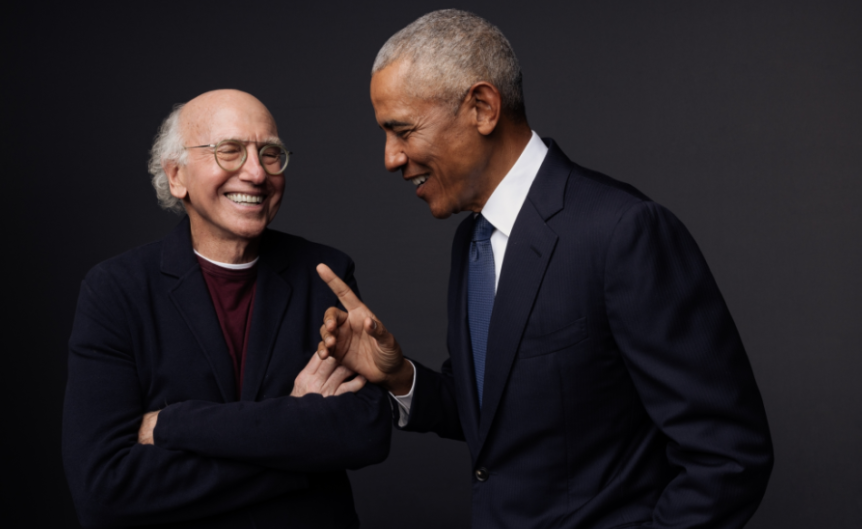
Schaffer has explained that the series uses history to discuss current problems and the danger of repeating old failures. HBO expresses the same idea through its official logline, “Those who don’t know history… are doomed to watch Larry David repeat it.” The seven-part production was created by David and Schaffer and executive produced with Barack and Michelle Obama’s Higher Ground.
Political comedy can become tiresome when the message arrives before the joke. Episode 4 avoids most of that trap because Perrie keeps escalating, David commits to Dora’s outrage, and Gold responds like somebody who has waited years to shout back. I would take this angry, specific segment over another historical parking dispute any Friday night.
Did the finale make you laugh, or did the Kennedy and Hines connection give it an awkward edge? Drop your verdict below, and follow FandomWire for more TV coverage.
Life, Larry and the Pursuit of Unhappiness Episode 4 is streaming on HBO.
This post belongs to FandomWire and first appeared on FandomWire
from FandomWire https://ift.tt/xTcz1XH


No comments: