
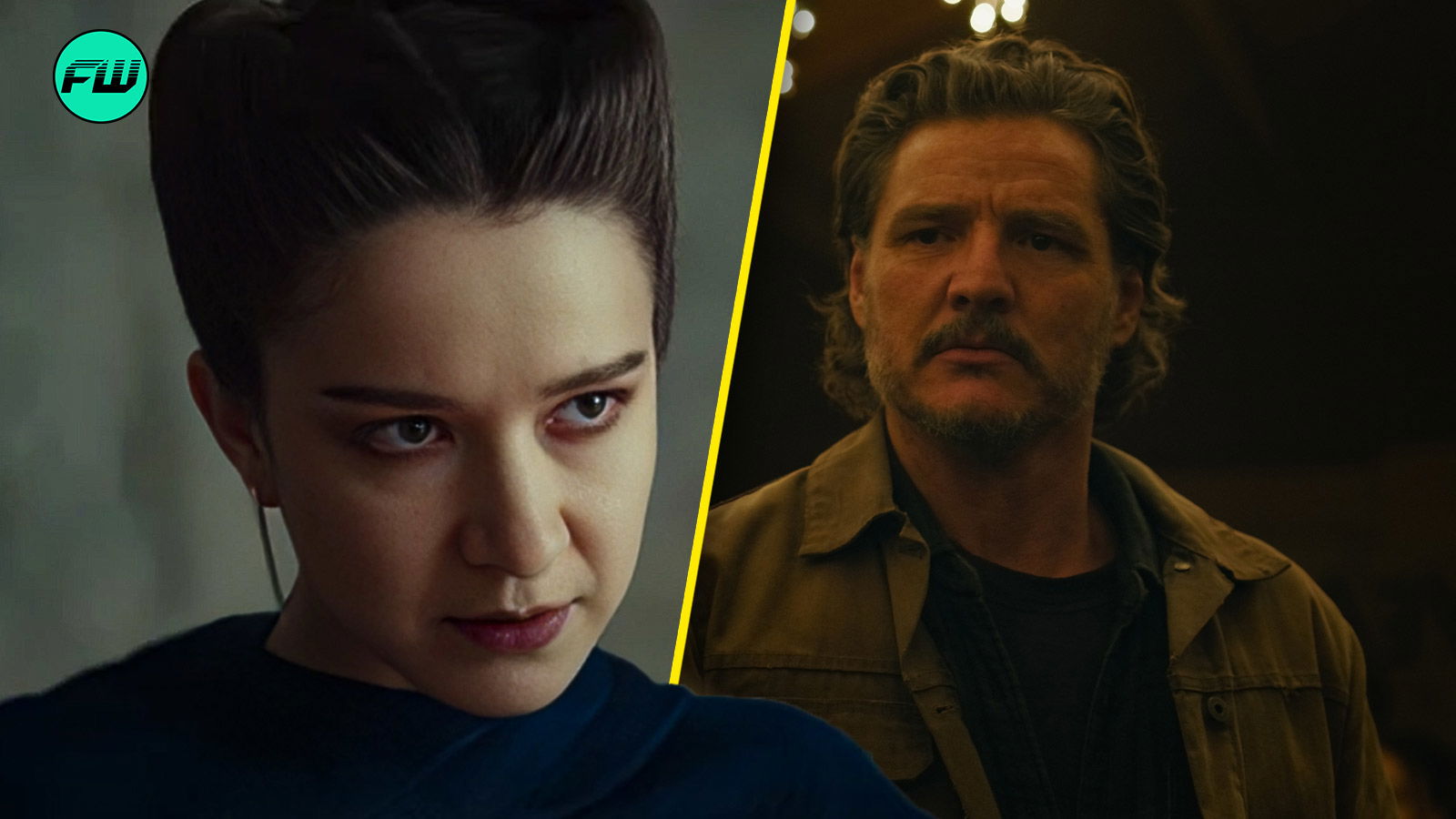
There’s a certain kind of heartbreak that lingers when you see two people who love each other silently make a choice they can never take back. That’s what The Last of Us and Andor Season 2 gave us— two gut-wrenching decisions, made for love, but pulling in opposite directions.
In The Last of Us, Joel couldn’t let go. In Andor, Kleya did, both out of love, both unbearably human, both were made for someone they couldn’t bear to lose. Both stories aired close together, and if you were watching both, it felt like the universe was conspiring to break your heart twice in one week. And suddenly, what felt like two very different shows start to mirror each other in the most devastating way.
Why did Kleya choose to let go?
Kleya’s choice in Andor Season 2 is one of the most emotionally charged and complex moments in the series, and to understand why she did what she did requires one to look deeply at her situation and mindset. Luthen Rael, her father figure and the leader of the early Rebellion, was gravely injured and imprisoned in one of the Empire’s most secure medical facilities.
His secrets alone could break everything the rebellion had built. The stakes were clear. If he lived, the Empire would torture and bleed the truth out of him.
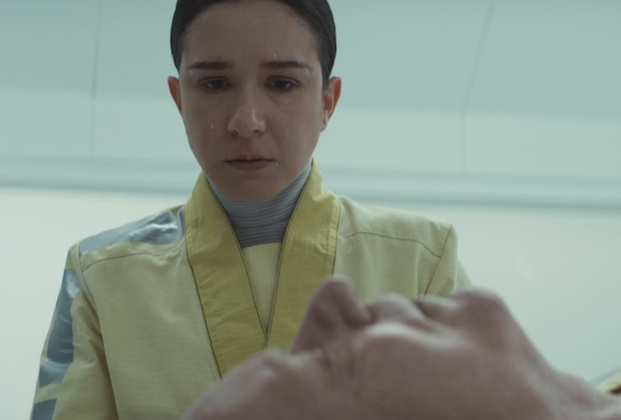
Thus, Kleya’s decision to sneak in disguised as a hospital worker carried huge risks. And here, many viewers might have expected her to attempt an escape. Instead, she did something much harder, and quite unexpected, she quietly took Luthen off life support, ending his suffering and his life.
At first glance, it’s natural to wonder why Kleya didn’t try to keep him alive, wait for a better chance, or call for help from Cassian or other rebels to orchestrate a rescue. But the answer lies in what Luthen had taught her all her life, that the rebellion must come first, no matter the cost.
Luthen was not only a father figure to Kleya but also a man who lived and breathed the rebellion’s cause, often putting the mission above all else, even his own safety.
Thus, her decision was not one of surrender or despair but a brutal act of love and loyalty. It showed her acceptance of the harsh realities of war, where sacrifice is often the only choice. She could have tried to hope for a rescue or waited for reinforcements, but doing so might have only made Luthen’s suffering longer and endangered countless others.
Her act was, therefore, the ultimate protection of everything Luthen stood for, the cause, the people, and the future they all dreamed of. In a way, she did save Luthen that day. This made her sacrifice deeply tragic yet also very powerful, because it reflected a different kind of courage, the courage to let go.
Why Joel couldn’t do what Kleya did….
Joel’s choice of not letting Ellie go at any cost is deeply rooted in his past and his emotional wounds, and it’s what sets him apart from Kleya’s heartbreaking decision in Andor. Unlike Kleya, who made the agonizing choice to let go for the greater good, Joel simply couldn’t bring himself to do the same.
After losing his own daughter so tragically, Joel found a second chance at fatherhood with Ellie, a bond that healed parts of him he thought were forever broken.

When Joel arrived at the hospital, he was faced with the impossible truth, Ellie’s life had to end so that humanity’s future might continue, “might” being the keyword here.
He had spent years being ruthless, shutting himself off emotionally, and surviving in a world that had taken everything from him. Thus, for him, Ellie, a reason to fight for life again.
Moreover, protecting Ellie wasn’t just about saving her life, it was about protecting the family he’d finally built after so much loss. Joel saw this as his opportunity to make things right, to be the father he never could be for his real daughter. Letting Ellie die would have meant losing that chance forever, and Joel wasn’t willing to accept that. This was his moment to protect his “daughter” no matter what, even if it meant sacrificing humanity’s hope.
He lied to Ellie afterward, shielding both of them from the unbearable truth, hoping to protect their bond. This is why Joel’s choice feels so human, flawed, complicated, and heartbreakingly understandable.
Two sides of the same coin…
Joel’s and Kleya’s choices hit home because they come from places anyone can understand, love, fear, and sacrifice. Joel clings to Ellie because after losing his own daughter years ago, she became his whole world, his last chance at family.

Thus, his decision to save her, even if it means dooming the rest of humanity, is heartbreakingly human. Who wouldn’t fight tooth and nail to protect the person they love most, especially after losing so much before?
Kleya’s choice, on the other hand, is just as human but rooted in a different kind of love, a love for something bigger than herself. She knew what the stakes were very well. Her decision to take him off life support is gut-wrenching yet brave. Kleya’s love is tied to duty, sacrifice, and hope for a better future, even if that future comes at the price of losing the person she loves the most.
Both choices show that love isn’t simple; it’s messy, complicated, and full of impossible decisions. Funny enough, it reminds me of what the hot priest from Fleabag said so accurately,
Love is awful.[It] makes you cruel, makes you say and do things you never thought you would do.
Joel’s love makes him hold on, while Kleya’s love pushes her to let go. Neither choice is clearly right or wrong, they’re just deeply human reactions to impossible situations. And that’s why we, the fans, can understand and empathize with both of them, even as their stories lead to such different endings.
The Last of Us is now available to stream on Max, while Andor is currently streaming on Disney+.
This post belongs to FandomWire and first appeared on FandomWire
from FandomWire https://ift.tt/N7OXBuo


No comments: